Table of Contents
A few years ago, a small fashion brand opened its doors in a busy neighborhood. The owner had passion, beautiful products, and a dream of building a global brand. She invested in a good shop, printed flyers, and told friends and family about the business. But months passed, and something felt wrong. The shop was quiet. Sales were slow. People who walked past rarely stepped in.
One evening, while scrolling through her phone, she noticed something interesting. Other brands—some smaller than hers—were constantly appearing on Instagram, Google, and even YouTube. Their products were everywhere online. Customers were commenting, sharing, and buying.
She asked herself a simple question: How are these businesses reaching so many people?
The answer was digital marketing.
Within months of learning how online marketing works for businesses, she created social media pages, launched a simple website, and started sharing helpful content. Her brand began showing up on Google searches. Customers started discovering her through social media marketing and email marketing campaigns. Slowly but steadily, her quiet shop turned into a thriving business.
Today, stories like this are happening everywhere. From small startups to large companies, businesses are realizing that the internet is no longer optional. It is where customers search, compare, learn, and buy.
That is why understanding what digital marketing is and how it works has become one of the most important skills for modern businesses.
In this beginner guide to digital marketing, we will explain the digital marketing meaning, how digital marketing works step by step, the benefits of digital marketing for companies, and how brands can build powerful digital marketing strategies for business growth.
What Is Digital Marketing?
Let us start with the basics.
The digital marketing definition is simple.
Digital marketing is the promotion of products, services, or brands using digital channels such as websites, search engines, social media, email, and online advertising.
In other words, digital marketing means reaching customers through the internet.
Instead of relying only on billboards, radio, or newspapers, businesses now connect with people through:
- Google searches
- Social media platforms
- Websites and blogs
- Email newsletters
- Online ads
This is why digital marketing is also called:
- Online marketing
- Internet marketing
- Telemarketing
Digital Marketing Explained Simply
Think of digital marketing like opening a shop in the busiest market in the world.
The internet is that market.
Every day, billions of people search for answers, products, services, and ideas online. Digital marketing helps businesses place their brand where people are already looking.
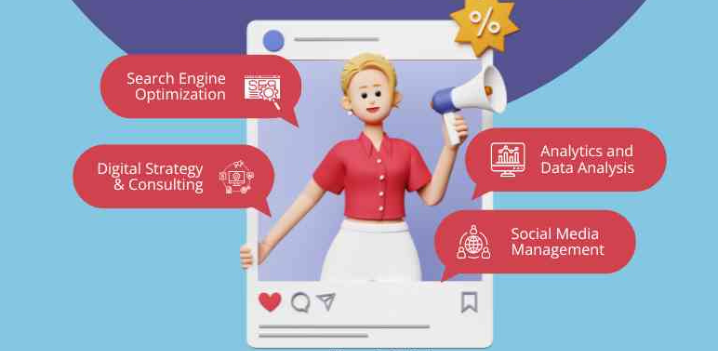
When someone searches “best restaurant near me” or “digital marketing agency in Abuja”, search engines show them relevant businesses.
When someone scrolls Instagram or Facebook and discovers a new product, that is social media marketing at work.
When a customer receives a helpful newsletter with offers and tips, that is email marketing.
All these actions form part of the digital marketing process.
Types of Digital Marketing
There are many digital marketing channels, and each one plays a different role in helping businesses grow.
Let us look at the most important ones.
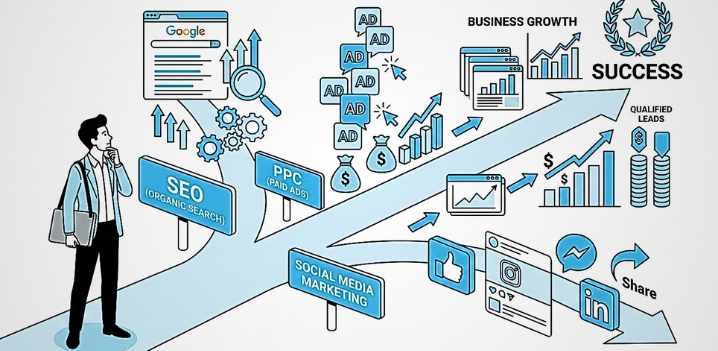
1. Search Engine Optimization (SEO)
Search engine optimization (SEO) helps businesses appear on Google when people search for related products or services.
For example:
If someone searches “SEO agency Nigeria” or “digital marketing services in Nigeria,” companies with strong SEO strategies appear at the top of search results.
SEO focuses on:
- Keyword research
- Website optimization
- Content creation
- Technical improvements
- Backlinks and authority building
Good SEO improves website traffic generation and increases online brand visibility.
2. Social Media Marketing
Social media marketing uses platforms like:
- TikTok
to connect with audiences.
Businesses share stories, videos, promotions, and helpful content to build trust and engagement.
When done well, social media becomes a powerful tool for:
- brand awareness
- community building
- lead generation
- customer loyalty
3. Content Marketing
Content marketing focuses on creating useful and valuable content that helps customers.
Examples include:
- blog articles
- videos
- guides
- infographics
- tutorials
Content marketing helps businesses answer customer questions and position themselves as experts.
This improves trust and attracts organic traffic through digital marketing strategies.
4. Email Marketing
Email marketing remains one of the most effective digital marketing tools.
Businesses send newsletters, offers, and updates directly to their audience.
Benefits include:
- nurturing leads
- increasing customer loyalty
- promoting products
- sharing helpful content
It is like having a direct conversation with your audience.
5. Pay-Per-Click Advertising (PPC)
Pay-per-click advertising allows businesses to run ads on platforms like:
- Google Ads marketing
- Facebook Ads
- Instagram Ads
Businesses only pay when someone clicks the ad.
This helps companies generate quick traffic and reach targeted audiences.
6. Website and Conversion Optimization
A website is the digital home of a business.
Digital marketing also focuses on conversion optimization, which means turning website visitors into customers.
This involves:
- clear messaging
- strong design
- fast loading speed
- easy navigation
- clear calls to action
Benefits of Digital Marketing for Businesses
Understanding the benefits of digital marketing helps businesses see why it is so powerful.
1. Increased Online Brand Visibility
The internet allows businesses to reach people beyond their local area.
A company in Abuja can serve customers in Lagos, London, or even New York.
2. Targeted Audience Reach
Traditional advertising shows messages to everyone.
Digital marketing allows businesses to target specific people based on:
- interests
- location
- age
- profession
- behavior
This makes marketing more efficient.
3. Measurable Results
One major advantage of digital marketing campaigns is that results are measurable.
Businesses can track:
- website visitors
- clicks
- conversions
- sales
This data helps companies improve their digital marketing strategies.
4. Cost-Effective Marketing
Compared to traditional advertising, online marketing often costs less and delivers better results.
Even small businesses can compete with large brands.
5. Lead Generation and Sales Growth
Digital marketing helps businesses attract potential customers and convert them into buyers.
This makes it a powerful tool for business growth.
How Digital Marketing Works Step by Step
Many people ask: how digital marketing works step by step.
Let us simplify the process.
Step 1: Define Your Goals
Every digital marketing strategy begins with clear goals.
Examples include:
- increasing website traffic
- generating leads
- boosting sales
- building brand awareness
Step 2: Understand Your Audience
Businesses must know who they want to reach.
Ask questions like:
- Who are our ideal customers?
- What problems do they want solved?
- Where do they spend time online?
Step 3: Build a Strong Online Presence
This includes:
- a professional website
- optimized social media pages
- valuable content
Your online presence is your digital storefront.
Step 4: Choose the Right Digital Marketing Channels
Not every channel works for every business.
Companies may focus on:
- SEO
- social media marketing
- email marketing
- Google Ads marketing
depending on their audience.
Step 5: Create Valuable Content
Content helps attract and educate customers.
Examples include:
- blog posts
- videos
- guides
- social media posts
This builds trust and authority.
Step 6: Launch Digital Marketing Campaigns
Businesses promote their products through:
- social media ads
- Google search ads
- email campaigns
- influencer collaborations
Step 7: Measure and Improve
The final step in the digital marketing process is analyzing results.
Businesses track data and improve their campaigns over time.
How Digital Marketing Agencies Make the Process Easier
While digital marketing offers huge opportunities, it can also feel overwhelming for businesses.
Managing SEO, ads, social media, content, and analytics requires time and expertise.
This is where a digital marketing agency becomes valuable.
Agencies provide professional online marketing services for businesses, helping brands build effective strategies and achieve measurable results.
A professional agency helps companies:
- develop strong digital marketing strategies
- manage digital marketing campaigns
- improve website traffic generation
- increase online brand visibility
- generate leads and conversions
Instead of guessing what works, businesses benefit from proven strategies and expert guidance.
A Digital Marketing Partner Positioned to Help Businesses Grow
Across Nigeria and beyond, many companies are searching for reliable digital marketing partners who understand how online marketing works for businesses.
One agency helping brands achieve measurable results is Adfluent Digital Marketing Agency, a digital marketing agency in Abuja focused on helping businesses grow online.
The agency provides a wide range of digital marketing services in Nigeria, including:
- social media marketing
- search engine optimization (SEO)
- email marketing
- web design and development
- website management
- graphic design
- brand design
- content strategy and copywriting
- content writing and marketing
- influencer management
By combining strategy, creativity, and data-driven insights, the agency helps businesses improve online brand visibility, lead generation, and conversion optimization.
Businesses looking for an experienced SEO agency Nigeria often need more than just rankings. They need a partner that understands branding, content, design, and digital growth strategies.
Operating from Abuja, the agency supports clients across Lagos, the USA, the UK, Canada, Cameroon, Kenya, and Ghana, helping businesses build strong digital foundations and scale their online presence.
The focus is simple: create effective digital marketing solutions that drive real business results.
Real Digital Marketing Examples
Let us look at simple digital marketing examples.
Example 1: A Restaurant
A restaurant uses:
- SEO to appear on Google searches
- Instagram to share food photos
- Google Ads to attract local customers
This increases bookings.
Example 2: A Fashion Brand
A clothing brand uses:
- influencer marketing
- Instagram ads
- email newsletters
to promote new collections.
Example 3: A Consulting Company
A consulting firm publishes helpful blog articles and guides.
This content ranks on Google and generates leads.
Digital Marketing Tools Businesses Use
Successful digital marketing relies on powerful tools.
Popular digital marketing tools include:
- Google Analytics
- Google Search Console
- SEMrush
- Ahrefs
- Mailchimp
- HubSpot
- Meta Ads Manager
These tools help businesses track performance and improve campaigns.
Why Digital Marketing Is Important for Businesses Today
The world has changed.
Customers no longer rely only on word-of-mouth or physical stores. They research online before making decisions.
Digital marketing allows businesses to:
- stay visible
- stay competitive
- reach global audiences
- build long-term relationships with customers
Without online visibility, even great businesses remain invisible.
Digital marketing is no longer just a trend. It has become the backbone of modern business growth.
From search engines to social media, email marketing to content marketing, digital marketing allows companies to reach customers in ways that were impossible just a few years ago.
Understanding what digital marketing is, how digital marketing works step by step, and the benefits of digital marketing for companies helps businesses build stronger brands, attract the right audience, and grow sustainably.
For businesses willing to invest in the right digital marketing strategies, the internet offers an endless marketplace filled with opportunity.
Whether a company wants to improve website traffic, generate leads, build stronger customer relationships, or expand into new markets, digital marketing provides the tools and channels to make it happen.
The real question is no longer whether businesses should embrace digital marketing.
The real question is this: how ready is your business to take full advantage of the opportunities waiting online?